Austin Nomad (1963–1969)
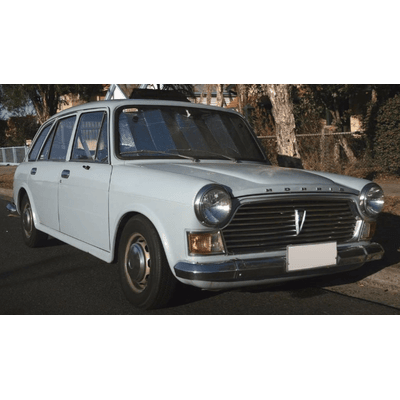
Introduction and Historical Significance
The Austin Nomad was introduced in 1963 as a station wagon version of the popular Austin 1800. Designed for families and businesses who required more cargo space, the Nomad combined the practicality of a wagon with the comfort of a family saloon. It was intended to cater to the growing demand for family cars that offered both space and versatility without sacrificing style.
The Nomad was marketed as a practical alternative to larger family cars and found success as a utility vehicle in both urban and rural areas. The car’s distinctive styling, combined with its ability to carry both passengers and cargo, made it a popular choice for many families during the 1960s.
Technical Specifications
- Engine: 4-cylinder, inline
- Displacement: 1.8 liters
- Power Output: 72 horsepower
- Transmission: 4-speed manual
- Chassis: Monocoque construction with independent suspension
- Weight: Approximately 1,100 kg (2,425 lbs)
The Austin Nomad was powered by a 4-cylinder engine that delivered adequate power for both family travel and carrying cargo. Its monocoque body construction and independent suspension system provided a comfortable ride, making it a practical choice for long-distance travel or daily commuting.
Variant Timeline
- Austin Nomad Saloon: The base model, offering a standard wagon body with minimal luxury features.
- Austin Nomad Deluxe: A higher-end variant with additional features and improved interior comfort.
The Nomad was offered in both standard and deluxe versions, with the deluxe model offering improved interior materials and extra comfort features. Both variants were designed to offer ample space for families while maintaining the practicality needed for businesses.
The Austin Nomad in New Zealand
The Austin Nomad was a popular family car in New Zealand, where its spacious interior and practical design made it ideal for both urban commuting and rural travel. It became a common sight on local roads, particularly among families who needed a reliable and versatile vehicle.
Today, the Austin Nomad remains a classic vehicle in New Zealand, with a few well-maintained examples preserved by enthusiasts. It is occasionally showcased at vintage car events and remains a beloved part of New Zealand’s automotive history.