Austin Mini-Minor (1959–2000)
Introduction and Historical Significance
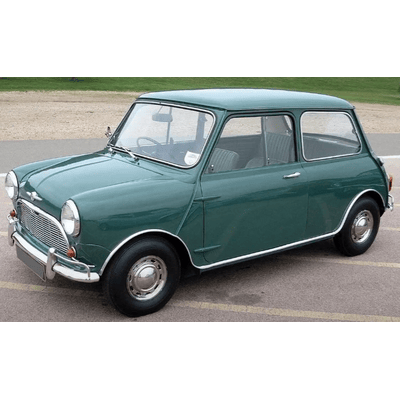
The Austin Mini-Minor was introduced in 1959 and revolutionized the automotive world with its compact size, efficient design, and affordability. Designed by Sir Alec Issigonis, the Mini became an icon of British motoring and was produced in multiple versions, with the Mini-Minor being one of the most recognized variants. The original design of the Mini was aimed at providing maximum space within a small footprint, making it one of the first true city cars.
The Mini's design, with its transverse engine and front-wheel drive, allowed for a spacious interior despite its small exterior dimensions. Its simplicity, ease of maintenance, and excellent handling made it a favorite for both everyday drivers and motorsport enthusiasts alike. The car’s affordability and efficiency helped it become a staple for British families and a symbol of 1960s British culture. It also gained international fame, being exported around the world and becoming a beloved classic.
Technical Specifications
- Engine: 4-cylinder, inline
- Displacement: 848 cc (initially), later increased to 1.0 liters
- Power Output: Approximately 34 horsepower (initially), later models offered up to 65 horsepower
- Transmission: 4-speed manual
- Chassis: Compact monocoque design for maximum interior space
- Weight: Approximately 600–700 kg (1,300–1,500 lbs), depending on model
The Austin Mini-Minor’s small 4-cylinder engine provided adequate power for the car's lightweight design, giving it exceptional fuel efficiency and excellent handling. The compact monocoque body allowed the Mini to carry more passengers and cargo relative to its size, making it a highly practical vehicle for city driving and small families. The 4-speed manual transmission helped keep the vehicle’s operation simple and cost-effective.
Variant Timeline
- Austin Mini-Minor Saloon: The standard model, featuring a two-door body with a roomy interior for passengers and cargo.
- Austin Mini-Minor Estate: A station wagon version, offering more cargo space for families or businesses.
- Austin Mini-Cooper: A sportier variant, designed for motorsport with a more powerful engine and improved handling.
The Austin Mini-Minor was produced in several variants, including the saloon, estate, and the high-performance Mini-Cooper. The Cooper models, introduced in the early 1960s, became particularly famous for their motorsport successes, including winning the Monte Carlo Rally. The estate version provided more cargo space, making it a popular choice for families or those needing a more practical vehicle.
The Austin Mini-Minor in New Zealand
The Austin Mini-Minor became a popular vehicle in New Zealand, where its compact size and fuel efficiency made it ideal for the country’s urban and rural roads. The Mini quickly became a favorite among city dwellers and small families who appreciated its low running costs and ease of parking. Its popularity extended to rural areas as well, where it was often used as a second car for local errands and short-distance travel.
Today, the Austin Mini-Minor remains a classic car in New Zealand, with numerous examples still in good condition and regularly displayed at vintage car shows and enthusiast clubs. It holds a special place in New Zealand’s automotive history, cherished by collectors and those who fondly remember its time on the road.