Austin Metro (1980–1997)
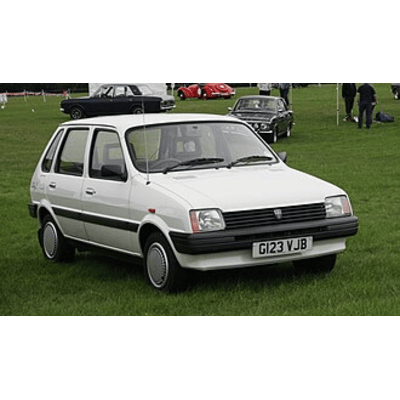
Introduction and Historical Significance
The Austin Metro was launched in 1980 as a supermini car designed to compete with other compact cars in the rapidly growing market. The Metro was designed as a practical, efficient, and affordable urban vehicle, and it was a part of the British Leyland company’s range. It featured a small but efficient 1.0L engine and was marketed as a city car with low running costs, ideal for new drivers and families looking for an economical option.
Despite being part of the same range as the iconic Mini, the Metro was aimed at a more modern audience and saw considerable success. The Metro was also sold under various badges, including Rover, during its production run, and became a staple on British roads. It was eventually replaced by the Rover 100 series in 1997.
Technical Specifications
- Engine: 4-cylinder, inline
- Displacement: 1.0 liters
- Power Output: 45–50 horsepower
- Transmission: 4-speed manual
- Chassis: Front-wheel drive with independent suspension
- Weight: Approximately 700 kg (1,543 lbs)
The Austin Metro was powered by a 1.0-liter engine, providing adequate performance for urban driving while keeping fuel consumption low. The compact design and front-wheel drive layout made it easy to handle and ideal for navigating crowded city streets. The Metro's lightweight construction contributed to its excellent fuel efficiency, making it an economical choice for everyday driving.
Variant Timeline
- Austin Metro 1.0: The standard version with a 1.0L engine, providing basic features and a low-cost option.
- Austin Metro L: A more luxurious version with upgraded features such as better interior trim and additional options.
- Austin Metro Turbo: A sportier variant with a turbocharged engine for improved performance.
The Austin Metro was available in various versions, including the base model and more premium trims. The Metro L offered additional comfort features, while the Metro Turbo was aimed at buyers looking for a more performance-oriented option. The Metro's versatility made it a popular choice for a wide range of customers.
The Austin Metro in New Zealand
The Austin Metro found success in New Zealand, particularly in urban areas, due to its compact size, low operating costs, and fuel efficiency. It became a popular choice for first-time buyers, small families, and those looking for an affordable city car. Its small footprint made it ideal for navigating New Zealand’s cities, where parking space could be at a premium.
Today, the Austin Metro remains a rare classic in New Zealand, with a few well-preserved examples found in vintage car clubs and at local car shows.