Austin Maestro (1983–1994)
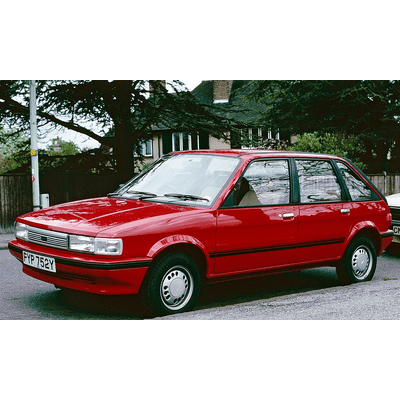
Introduction and Historical Significance
The Austin Maestro was introduced in 1983 as a compact family car designed to offer modern features, practicality, and good performance. It was part of the British Leyland group, later known as Rover Group, and was developed to compete with cars like the Ford Escort and Vauxhall Astra. The Maestro was a key model in the British carmaker's push to modernize its fleet, featuring front-wheel drive and a boxy yet practical design.
Although the Maestro was initially successful, it faced issues with reliability and quality that affected its long-term reputation. Nevertheless, it became a popular choice in the UK and other markets, particularly as a budget-friendly family car. Production continued until 1994, and it is considered an important part of the transition period for British Leyland and the subsequent Rover Group.
Technical Specifications
- Engine: 4-cylinder, inline
- Displacement: 1.3 to 1.6 liters
- Power Output: 55 to 92 horsepower
- Transmission: 5-speed manual, 4-speed automatic
- Chassis: Front-wheel drive with independent suspension
- Weight: Approximately 900–1,000 kg (1,984–2,205 lbs)
The Maestro was available with a range of engines, offering both fuel efficiency and adequate power for city and highway driving. The front-wheel-drive layout helped provide better space utilization and handling. With its five-speed manual transmission (and automatic options), the Maestro was designed for everyday drivers seeking a reliable and affordable car.
Variant Timeline
- Austin Maestro 1.3: The base model with a 1.3-liter engine, aimed at buyers looking for an affordable and economical car.
- Austin Maestro 1.6: A more powerful variant with the 1.6-liter engine and additional features.
- Austin Maestro Turbo: A performance-oriented version with a turbocharged engine for improved performance.
The Maestro was available in several variants, with the 1.3-liter engine being the most basic and the 1.6-liter offering improved performance. The Turbo version, although rare, provided sportier handling and power, catering to buyers seeking more excitement behind the wheel.
The Austin Maestro in New Zealand
The Austin Maestro found some success in New Zealand, especially with families looking for an affordable, practical vehicle. Its compact size made it ideal for city driving, and it provided a reasonable amount of space for passengers and cargo. However, its reputation for reliability issues meant it was not as popular as other vehicles in New Zealand.
Today, the Austin Maestro remains a rare classic, with a small number of well-maintained examples still in good condition in New Zealand, mostly found in vintage car clubs and at classic car events.