Austin J4 (1960–1968)
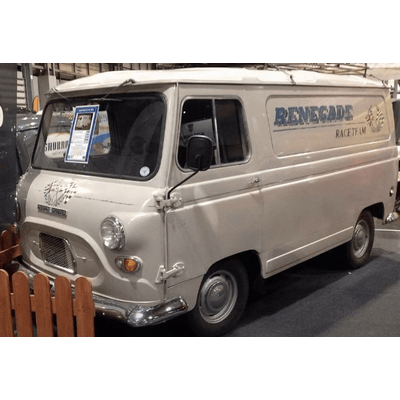
Introduction and Historical Significance
The Austin J4 was introduced in 1960 as a light commercial vehicle designed to meet the growing demand for cargo and passenger transport in post-war Britain. It was a successor to the earlier J3 and was aimed at small businesses and tradespeople who required an affordable and versatile van for transporting goods and passengers.
The J4 was designed as a boxy, utilitarian vehicle, offering ample cargo space, reliability, and low operating costs. Its practical design made it a popular choice for various businesses, and it also found use as a passenger van, particularly in rural areas. Its ability to be adapted for different purposes helped it remain in production for several years.
Technical Specifications
- Engine: 4-cylinder, inline
- Displacement: Approximately 1.5 liters
- Power Output: 55 horsepower
- Transmission: 4-speed manual
- Chassis: Heavy-duty design for commercial use
- Weight: Approximately 1,250 kg (2,755 lbs)
The J4 was powered by a 4-cylinder engine, providing just enough power for the vehicle’s size and cargo capacity. The transmission was designed for ease of use, and the vehicle's suspension system was built to handle heavy loads while providing a smooth ride. Its durability and ability to be adapted for a variety of commercial uses made it a versatile choice in the light commercial vehicle market.
Variant Timeline
- Austin J4 Van: The standard model, used for transporting goods.
- Austin J4 Minibus: A passenger version that was used for transporting people in comfort.
The J4 was available in multiple configurations, including the standard van and a minibus version, which made it versatile for both commercial and passenger transport. The minibus version was often used by businesses or community groups for transporting people, offering both space and comfort in a utilitarian vehicle.
The Austin J4 in New Zealand
The Austin J4 was popular in New Zealand, where its reliability, low cost, and practical design made it a common choice for small businesses and rural transport. Its spacious cargo area and durability allowed it to be used for a variety of commercial applications, from small delivery services to agricultural and tradesman vehicles.
Today, the Austin J4 is a rare collector's item in New Zealand, with several well-maintained examples still in existence, often showcased in vintage car clubs and classic vehicle events.