Austin Freeway (1961–1966)
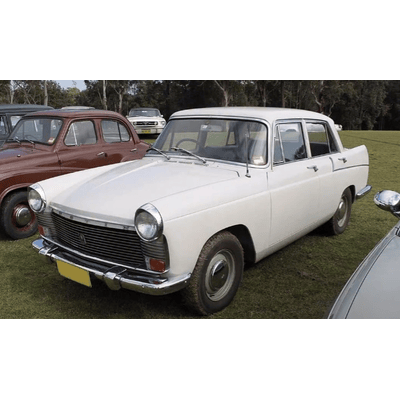
Introduction and Historical Significance
The Austin Freeway was introduced in 1961 as a larger family car aimed at competing with other mid-size sedans on the market. It was one of Austin’s first forays into the upper-middle class car market, designed to provide more power, space, and comfort than the smaller Austin models. The Freeway was available in both 4-door and 2-door versions, appealing to families and business owners alike.
The car was produced for a relatively short period, from 1961 to 1966, but it played a key role in Austin’s range during the 1960s, offering more luxurious options compared to the smaller A40 and A50 models. The Freeway was exported to various countries, including New Zealand, where it was appreciated for its practicality and reasonable price for the size and luxury it offered.
Technical Specifications
- Engine: 6-cylinder, inline
- Displacement: 2.2 liters
- Power Output: 80 horsepower
- Transmission: 4-speed manual
- Chassis: Monocoque construction with independent suspension
- Weight: Approximately 1,150 kg (2,535 lbs)
The Austin Freeway was powered by a 6-cylinder engine, offering a balance of power and smooth performance for long-distance driving. The vehicle’s monocoque body construction and independent suspension system ensured that it provided a comfortable and stable ride, making it suitable for both urban commuting and longer family trips.
Variant Timeline
- Austin Freeway Saloon: The most common version, providing a spacious, comfortable, and reliable saloon body style.
- Austin Freeway Coupe: A two-door variant, offering a sportier appearance with similar performance features.
The Freeway was available in both saloon and coupe variants, catering to both families looking for a practical vehicle and individuals seeking a sportier design. The saloon was the most common version, but the coupe offered a more stylish, personal option for those interested in a more dynamic look.
The Austin Freeway in New Zealand
The Austin Freeway found success in New Zealand, where it was used by families and businesses for its comfortable ride, practicality, and good value. The car’s larger size and power compared to smaller Austin models made it a popular choice for those who needed more space or who traveled longer distances.
Today, the Austin Freeway remains a classic vehicle, with examples still in good condition in New Zealand, where it is a sought-after model for collectors and vintage car enthusiasts.