Austin A99 (1959–1966)
Introduction and Historical Significance
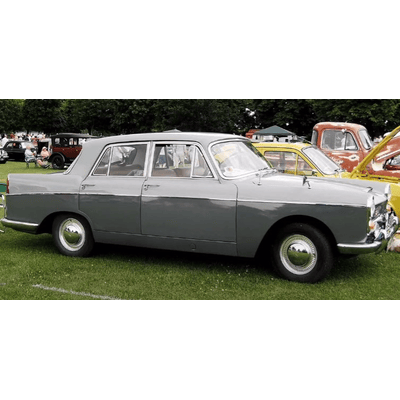
The Austin A99 was introduced in 1959 as a large luxury saloon car, aimed at the upper end of the market. It was produced during a time when British manufacturers were looking to offer more sophisticated and refined vehicles to compete with European and American brands. The A99 was the successor to the A90 Atlantic and was designed to provide a comfortable, spacious, and reliable ride for families and business executives.
The A99 featured a more powerful engine, improved suspension, and modern styling. Its design was based on the Farina range, with the A99 being one of the final iterations of the Austin Farina series before the introduction of the newer models in the 1960s.
Technical Specifications
- Engine: 6-cylinder, inline
- Displacement: 2.6 liters
- Power Output: 92 horsepower
- Transmission: 4-speed manual
- Chassis: Unibody design, designed for comfort and performance
- Weight: Approximately 1,300 kg (2,866 lbs)
The A99 was powered by a 6-cylinder engine that provided smooth and reliable power for both city and long-distance driving. It was known for its refined performance, smooth handling, and the level of comfort it provided, especially for business executives and affluent families.
Variant Timeline
- Austin A99 Saloon: The standard luxury saloon model, providing ample space and comfort.
- Austin A99 Countryman: A wagon version with additional cargo capacity for business or family use.
The A99 was available in both saloon and countryman variants. The saloon was the primary version, but the countryman offered extra cargo space, making it a versatile option for businesses or larger families who needed more storage.
The Austin A99 in New Zealand
The Austin A99 was popular in New Zealand, where it was seen as a luxurious family car. Its large interior, smooth ride, and stylish design made it a preferred choice for high-net-worth individuals and businesses needing a reliable executive transport vehicle. The A99 became a common sight on New Zealand roads during the 1960s, particularly in larger cities.
Today, the Austin A99 remains a rare and prized classic in New Zealand, with a few well-preserved examples showcased in car collections and at vintage car events.