Austin A40 Somerset (1949–1952)
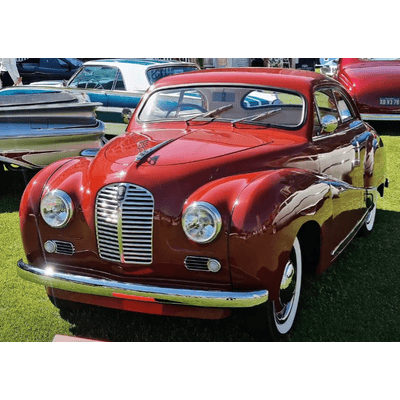
Introduction and Historical Significance
The Austin A40 Somerset was introduced in 1949 as part of Austin's post-war recovery strategy, offering a stylish and affordable vehicle for the British market. Positioned as a more upscale version of the A40, the Somerset was designed to appeal to customers seeking a comfortable and reliable vehicle for family use. Its elegant design and good performance made it popular in the early 1950s.
Although it was not as high-profile as other luxury models in the Austin range, the A40 Somerset helped establish Austin’s reputation for producing dependable and well-designed vehicles during the early post-war years. Its affordability made it accessible to a broader market, making it a staple on British roads and in export markets like New Zealand.
Technical Specifications
- Engine: 4-cylinder, inline
- Displacement: Approximately 1.2 liters
- Power Output: 40 horsepower
- Transmission: 4-speed manual
- Chassis: Sturdy construction, with improved suspension for comfort
- Weight: Approximately 900 kg (1,984 lbs)
The A40 Somerset was equipped with a reliable 4-cylinder engine that provided sufficient power for everyday driving. The suspension system was designed to offer a smoother ride than previous models, and the car’s compact size made it ideal for urban and rural driving alike. Its affordability and efficient design made it popular among families and small businesses.
Variant Timeline
- Austin A40 Somerset Saloon: The main version, offering comfort and practicality for family use.
- Austin A40 Somerset Countryman: A wagon version that provided more cargo space for families or businesses requiring a utility vehicle.
The A40 Somerset was available as a saloon for everyday use and as the Countryman, which was a wagon variant designed for those needing additional space. The Countryman was particularly useful for families and small business owners.
The Austin A40 Somerset in New Zealand
The A40 Somerset was imported to New Zealand during the early 1950s and became a popular family car due to its affordability, practicality, and comfort. It was widely used by middle-class families and small business owners who appreciated its durability and efficiency.
Today, the Austin A40 Somerset remains a cherished classic in New Zealand, with several examples preserved in vintage car clubs and displayed at classic car events.