Austin 3 Litre (1967–1971)
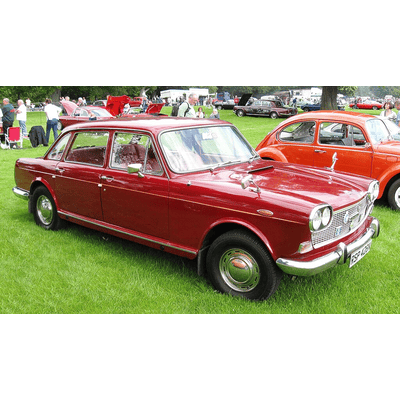
Introduction and Historical Significance
The Austin 3 Litre was introduced in 1967 as a large saloon car aimed at providing a more luxurious option within the BMC (British Motor Corporation) range. It was powered by a 3-litre 6-cylinder engine, designed to compete with other British luxury sedans such as the Jaguar and Rover models. The 3 Litre was marketed as a more affordable alternative to these larger luxury cars, offering a comfortable ride, ample space, and a smooth driving experience.
Despite its high-quality construction and advanced features for its time, the 3 Litre was not a commercial success, and it was discontinued in 1971. However, it remains a noteworthy part of BMC’s history due to its ambitious design and its attempt to capture the high-end market in the UK.
Technical Specifications
- Engine: 6-cylinder, inline
- Displacement: 3.0 liters
- Power Output: 112 horsepower
- Transmission: 4-speed manual
- Chassis: Unibody construction with independent suspension
- Weight: Approximately 1,500 kg (3,307 lbs)
The 3 Litre featured a powerful 6-cylinder engine that gave it ample power for both urban driving and long-distance cruising. It also featured a unibody construction and independent suspension system, which contributed to its smooth ride and stable handling. Its large body and high level of comfort made it ideal for families or those requiring a luxury vehicle for business use.
Variant Timeline
- Austin 3 Litre Saloon: The standard luxury version with comfortable seating for up to five passengers.
- Austin 3 Litre Estate: A more spacious variant with additional cargo room for businesses or larger families.
The 3 Litre was available in both saloon and estate variants. The saloon was the most common and focused on providing a smooth and luxurious ride, while the estate offered more cargo space for those needing a vehicle that could also accommodate larger loads.
The Austin 3 Litre in New Zealand
The Austin 3 Litre was a rare sight in New Zealand, though its luxury features and spacious interior made it appealing to affluent families and business executives. While it did not enjoy widespread popularity, it still found its way into the local market and was admired for its elegance and smooth performance.
Today, the Austin 3 Litre is a collector’s item, with examples carefully maintained by vintage car enthusiasts and displayed at classic car shows in New Zealand.