Austin 18/24 (1907–1910)
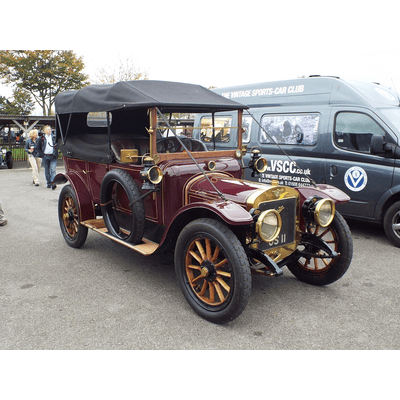
Introduction and Historical Significance
The Austin 18/24, introduced in 1907, was a major milestone for the Austin Motor Company as it marked the company's move into the higher-end car market. Aimed at middle-class consumers, it was an affordable yet more powerful alternative to other cars in its range. The 18/24 was produced during a time when there was increasing demand for reliable and durable cars for both private and commercial purposes.
Herbert Austin's vision for the Austin 18/24 was to create a well-balanced vehicle that offered luxury features without the prohibitively high cost. The car’s engine was one of the strongest in its class at the time, and it was designed to provide a smooth driving experience while maintaining affordability for the growing middle class in the UK and abroad, including in New Zealand.
Technical Specifications
- Engine: 4-cylinder, side-valve
- Displacement: Approximately 4.0 liters
- Power Output: 18 to 24 horsepower
- Transmission: 4-speed manual
- Chassis: Sturdy ladder frame with a variety of body styles
- Brakes: Mechanical drum brakes
- Weight: Approximately 1,000 kg (2,200 lbs)
The Austin 18/24 was powered by a robust 4-cylinder engine, offering a perfect blend of performance and economy for its time. The vehicle featured a four-speed manual transmission, allowing smooth gear changes and greater control. Its sturdy construction made it well-suited for both urban and rural environments, and its mechanical drum brakes ensured a safe driving experience despite the limited brake technology of the time.
Variant Timeline
- Austin 18/24 Saloon: The most common variant, offering a closed-body design suitable for family use and business applications.
- Austin 18/24 Tourer: A more stylish open-top version, popular with those who sought a more recreational vehicle.
The 18/24's production run, from 1907 to 1910, included various configurations to meet the needs of different customers. The saloon variant was ideal for those who needed a comfortable, enclosed vehicle, while the tourer catered to those seeking an open-air experience. Despite its relatively short production run, the Austin 18/24 helped solidify Austin’s reputation as a maker of reliable and versatile cars.
The Austin 18/24 in New Zealand
The Austin 18/24 found a niche market in New Zealand, particularly among the growing middle class during the early 20th century. Its combination of affordability and solid performance made it appealing to a range of buyers, from business owners to those looking for a reliable family car. New Zealand, during this time, was witnessing a rapid increase in car ownership, and the Austin 18/24 was one of the vehicles that helped drive this change.
The car’s durability made it a popular choice in both urban and rural areas, as it could handle the diverse terrain of New Zealand’s roads. While not as common as smaller models like the Austin 7, the 18/24 contributed to the shaping of New Zealand’s early motoring culture and was admired for its blend of performance and economy. Today, surviving models are considered rare collector’s items, especially in New Zealand, where vintage car enthusiasts continue to appreciate their historical significance.
Wiring Diagram
Ruby WiringManuals
Austin Seven HandbookOther Websites
WOF /Other Info
They do not self-center the steering wheel