Austin 1800 (1964–1975)
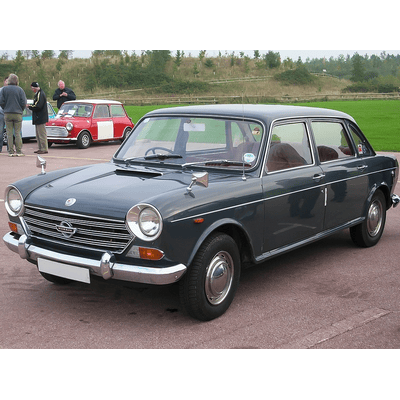
Introduction and Historical Significance
The Austin 1800 was introduced in 1964 as a large family car designed by BMC (British Motor Corporation). It was part of the Farina range and was aimed at providing a spacious and comfortable vehicle with modern features for middle-class families. The 1800 was noted for its innovative design, including its unibody construction and independent suspension system, which gave it a smooth ride and better handling compared to many contemporary vehicles.
Despite initial promise, the 1800 was plagued by reliability issues, particularly with its hydraulically operated suspension system. However, it remained a popular car for families during its production years and was used as both a family car and a commercial vehicle in various countries, including New Zealand.
Technical Specifications
- Engine: 4-cylinder, inline
- Displacement: 1.8 liters
- Power Output: 75 horsepower
- Transmission: 4-speed manual
- Chassis: Monocoque construction with independent suspension
- Weight: Approximately 1,100 kg (2,425 lbs)
The Austin 1800 was powered by a 1.8L 4-cylinder engine, which provided a smooth and reliable driving experience. The vehicle featured an independent suspension system, which contributed to its comfort and handling. It was a large car for its time, offering a spacious interior ideal for long journeys.
Variant Timeline
- Austin 1800 Saloon: The standard version of the 1800, with a traditional 4-door body style.
- Austin 1800 Estate: A station wagon variant, offering extra cargo space and versatility.
The Austin 1800 was available as both a saloon and an estate (station wagon) version. The saloon was the most common, catering to families and businesses, while the estate version offered more practicality with increased cargo capacity, making it ideal for transporting goods or larger families.
The Austin 1800 in New Zealand
The Austin 1800 was popular in New Zealand, especially among larger families or businesses that required a spacious vehicle. Its advanced suspension system and smooth ride made it a comfortable choice for long-distance driving. However, its issues with reliability meant it was not as widely accepted as some other vehicles in New Zealand.
Today, the Austin 1800 is a rare classic car, with a few examples preserved by collectors and displayed at vintage car events in New Zealand.