Austin 14 (1932–1936)
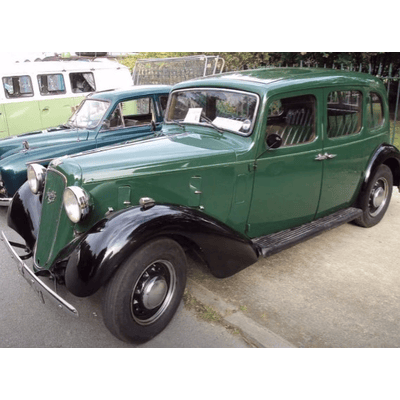
Introduction and Historical Significance
The Austin 14 was introduced in 1932 as a larger and more refined vehicle compared to the 12/4, aimed at customers who desired more space and power without the high cost of larger luxury cars. It was designed to appeal to middle-class families and small business owners, offering both reliability and performance. The Austin 14’s popularity stemmed from its combination of comfort, value, and affordability during the Great Depression.
The 14 was an important model for Austin, providing a stepping stone for customers looking for something bigger and more comfortable than the smaller cars in their lineup.
Technical Specifications
- Engine: 4-cylinder, side-valve
- Displacement: Approximately 2.0 liters
- Power Output: 14 horsepower
- Transmission: 3-speed manual
- Chassis: Reinforced frame
- Weight: Approximately 950 kg (2,091 lbs)
The Austin 14’s engine provided adequate power for everyday driving, while its larger size allowed for a more spacious interior. The model was well-regarded for its smooth ride, solid construction, and the fact that it could comfortably carry a family or small business load.
Variant Timeline
- Austin 14 Saloon: The main body style, offering a comfortable and practical ride for families and businesses.
- Austin 14 Tourer: An open-top version for those who enjoyed outdoor driving.
The Austin 14 came in both saloon and tourer variants, catering to different customer needs. The saloon was more popular for everyday use, while the tourer appealed to those who wanted a more recreational driving experience.
The Austin 14 in New Zealand
The Austin 14 was a popular vehicle in New Zealand, particularly among middle-class families and small business owners. Its larger engine and greater passenger capacity made it ideal for the country’s rural areas, where reliable and spacious vehicles were in demand. It played a key role in New Zealand’s motoring history during the 1930s.
Today, the Austin 14 remains a cherished part of New Zealand’s automotive history, with examples of the model preserved in vintage car clubs and collections.